


1
AI Agent Development Services
Stop managing tasks, start collecting results. Launch custom, autonomous AI agents that execute complex business processes, deliver immediate ROI, and increase productivity. As an AI agent development company, we design, engineer, and deploy agents that handle your operations end-to-end.


Autonomous Enterprise AI Agents
Launch agents that work independently and eliminate manual execution overhead across complex enterprise workflows. Let them analyze data, trigger actions, and coordinate tasks between different systems, while you focus on higher-value processes.

Multi-Agent Systems
Effortlessly solve tasks that are too overwhelming for a single agent. We build entire networks of custom AI agents that cover dynamic, multi-step operations. Each agent has its narrow function, either analysis, planning, or execution, and the system coordinates outcomes.

Workflow Automation AI Agents
Automate everyday business processes with custom AI agent solutions that understand context, follow rules, and handle variations. Integrate them with your internal systems to speed up operations and stop wasting human capital on routine tasks.

AI Assistants for Operations
Back your team up with intelligent copilots that support daily tasks and fill knowledge gaps. These work alongside your staff, handling data retrieval, summarization, task scheduling, insights generation, and beyond, essentially acting as a force multiplier.

Conversational AI Agents
Deliver natural, human-level interaction through voice or chat interfaces. These agents understand intent, extract meaning, and complete tasks directly inside your systems. Use them to streamline support and reduce service load.

Intelligent Decision-Making Agents
Move from reactive to proactive business measures with intelligent decision-making agents. We build solutions capable of evaluating scenarios, predicting consequences, and suggesting optimal actions. These tools typically combine real-time data, analytics models, and your business rules.

AI Agents with RAG Pipelines
Combine LLMs with retrieval systems to build agents that rely on verified, enterprise-specific knowledge. They reference internal documents, databases, and APIs to stay accurate. Use them to deliver trusted answers, accelerate research, and prevent hallucinations.

MCP-Based AI Agents
Handle model context protocol development to orchestrate tools, systems, and models in a unified environment. These agents coordinate actions across APIs, databases, and microservices. Leverage them to standardize AI workflows and reduce integration complexity.

LLM Infrastructure & Integration Solutions
Set up reliable, scalable infrastructure to deploy, host, and monitor all your enterprise AI agents. Our LLM integration services enable either cloud, hybrid, or on-prem LLM deployments for observable, performant AI workloads.

AI Agents for Industry-Specific Automation
Create custom AI agent solutions for your particular industry, from finance and healthcare to logistics, manufacturing, and more. We help you adapt these tools to your operational nuances, regulatory landscape, data structures, and specific challenges.
Our Certifications & Reviews
Projects We Delivered for Our Clients
Browse more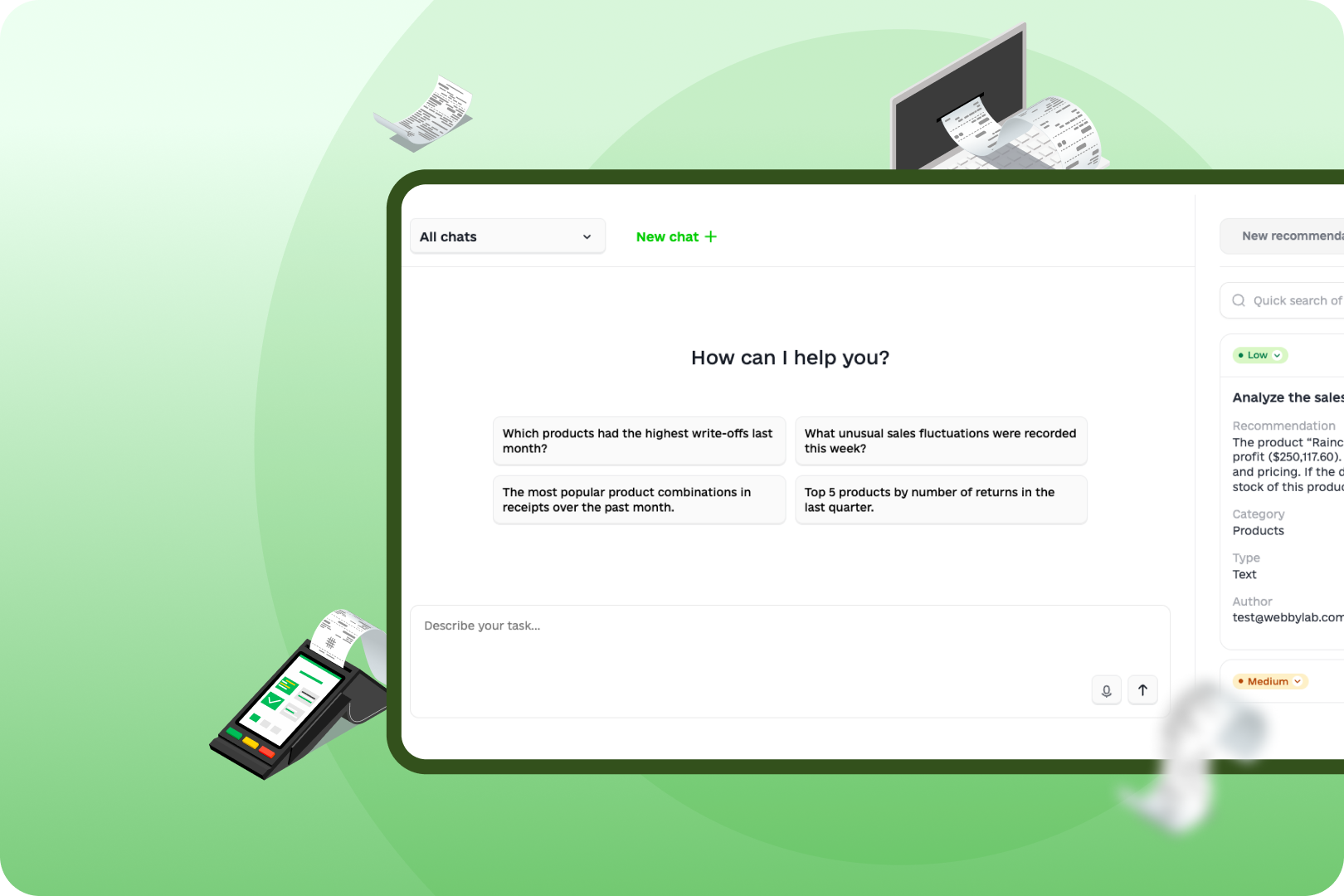
AI Agent for POS
AI module with chat, recommendation engine, and rules management capabilities.
Learn more...

AI Call Center Automation with Speech Recognition
We researched and built an AI speech recognition and diarization system, deployed on-premise, that automates call centre conversation analysis.
Learn more...
Our Testimonials
Check out what our clients think about our custom AI agent development services.

Iam Williams
Radius Advisory for Great Innovations/iFLO
WebbyLab has delivered the project on time and developed more than 25 features, significantly enhancing the solution's functionality and UX. The team has demonstrated flexibility in project management and is consistently accurate in estimates. WebbyLab is also committed and proactive.
Read more at Clutch

Andrew Muir Wood
Growth and Product Lead, Prix
WebbyLab expedited the launch of the platform, which was ready for customers in a matter of months. The team is adept at prioritizing tasks and turning ideas into actionable steps. Clients can expect superior project management and communication skills from WebbyLab.
Read more at Clutch

Michael Mangion
CEO, CrowdScores
The product was completed well with the majority of the deadlines throughout met. They were a dedicated team who demonstrated their ambition and excellent skillset, building an application that meets the need and is well maintained by the team.
Read more at Clutch

Vishal Patel
Architect, iBASEt
With a high level of technical expertise and a commitment to researching methods, WebbyLab was a fantastic partner. The team emphasized communication, responsiveness, and professionalism throughout the engagement.
Read more at Clutch

Andrew Volovyk
Managing Partner, Digital Health Outcomes
WebbyLab has been crucial to the success of the project, allowing the internal team to double both its size and revenue. Thanks to their ingenious ideas, they are always able to create the most intricate, unique solutions that outdo previously existing ones – a valuable capability.
Read more at Clutch

Glib Kutepov
CEO & Founder, Modelate
Their dedication to solving issues has established them as a solid partner. Their work extends beyond cookie-cutter solutions, as they delve into the finer details of custom programming and processes. It's a rare team that can deliver this on time, accomplished within budget, and with few flaws.
Read more at Clutch
Why Choose Custom AI Agent Development?
-

Due Diligence & AI Readiness Assessment
We analyze your current processes, data flows, and systems to design the most suitable agent architecture. This ensures you invest in solutions that deliver tangible ROI.
-
Seamless Fit for Legacy or Non-Standard Systems
If your API isn’t GraphQL/OpenAPI or your data is fragmented, standard tools fail. Custom agents integrate into complex enterprise environments without compromises.
-
Cost Efficiency at Scale
We tune models, prompts, and pipelines to reduce token usage and compute overhead. Many clients see operational cost reductions of up to 80%.
-
EU AI Act and ISO 42001 Compliance
We design secure, compliant data flows between agents and systems. You get agents that automate safely in regulated enterprise environments.
-
High Performance
AI agents we deliver are optimized for low latency, high throughput, and growing traffic. Your systems stay fast, even under load.
-
Deep Technical Tuning
We customize models to your domain-specific tools, protocols, and system architectures. This opens capabilities that generic platforms simply cannot reach.
-
No Vendor Lock-In
You own the AI agent code, data, infrastructure, and pipeline. Your automation stays portable and fully under your control.


MCP: The Backbone of Modern Enterprise AI Agents
Model context protocol (MCP) is the orchestration layer that enables AI agents to interact with tools, data sources, APIs, and enterprise systems in a standardized, secure way. With MCP for AI agents, you gain predictable behavior, high reliability, and modular scaling across departments. As part of our MCP development services, we handle MCP server development, custom MCP driver development, and MCP tools creation.
RAG-Enhanced Agents for Accurate, Context-Aware Automation
Retrieval-augmented generation (RAG) turns LLMs from probabilistic guessers into contextual AI applications. As a RAG pipeline development company, we design hybrid retrieval AI systems (including RAG with LangChain / LlamaIndex) that ensure agents always act on verified facts, internal documents, and up-to-date data.
Scalable LLM Infrastructure for Reliable AI Agents
Every enterprise-grade AI agent is built on a strong LLM stack. This hybrid LLM infrastructure development typically comprises architecture design, hosting, deployment, and model selection. Whether you choose commercial models or open-source solutions, our custom LLM application development ensures robust, low-latency performance.
Technologies and Integrations We Use
WebbyLab leverages a rich tech stack to deliver performant, reliable AI agents.
AI & LLM Frameworks

OpenAI API (GPT-4/5, o1)

Anthropic Claude (Sonnet / Opus)

Google Vertex AI

Gemini

Mistral / Mixtral

Ollama

LM Studio

Hugging Face Transformers

Text Generation Inference

LangChain

LlamaIndex

Haystack

Semantic Kernel

vLLM

FastChat

LMDeploy
MCP (Model Context Protocol) & Agent Frameworks
OpenAI MCP SDK / Server
LangChain Agents

CrewAI

Autogen
Semantic Kernel Agents
LlamaIndex Agents

Swarm

HuggingGPT

Dust

TaskWeaver

Custom MCP Drivers (REST, WebSocket, Python, Node.js)

Vector connectors (FAISS, Pinecone, Weaviate, Qdrant, Chroma)
RAG & Contextual Retrieval

FAISS

Qdrant

Weaviate
Pinecone

Chroma

Milvus

ElasticSearch

OpenSearch

Postgres + PGVector

SQLite + SQLite-Vec
LangChain retrievers (multi-vector, hybrid, compression retrievers)

Embeddings (OpenAI, Cohere, Voyage, HuggingFace, E5, etc.)
Backend & API Integration

Node.js

Python

NestJS

Express

Fastify

gRPC

REST

GraphQL

WebSocket

SSE for real-time agents

Docker

Kubernetes

Helm

Traefik

Nginx

Redis

Kafka

RabbitMQ

MQTT for event streaming
Data, Observability & Monitoring

Prometheus

Grafana

Loki

Tempo

Jaeger

Elastic Stack (ELK)

OpenTelemetry

PostHog

Sentry

Datadog

LLM observability (LangFuse, Helicone, Arize, Traceloop)
Storage, Knowledge & File Systems

Amazon S3

MinIO

Google Cloud Storage

Azure Blob
PostgreSQL

MySQL
SQLite
Redis

Notion

Confluence

Google Drive

Slack

GitHub

Jira connectors

Document loaders (PDF, DOCX, HTML, CSV, JSON, Markdown, EML)
Our Custom AI Agent Development Process
Our proven methodology makes sure you get a working AI agent in five simple steps.
FAQ
How do AI agents differ from traditional automation tools?
Traditional automation tools follow fixed rules. They typically fail when variables change. AI agents, in turn, are intelligent and adaptive. They can interpret context, make decisions, execute multi-step tasks autonomously, and even adapt to unexpected shifts.
What is the typical ROI from implementing AI agents?
ROI from AI agent development services varies by company. But generally, it’s 5x–10x returns or higher. This is achieved through drastic reductions in operational costs, faster processes enabled by automation, and a significant decrease in human errors.
How long does it take to build a custom AI agent?
This depends heavily on the agent’s complexity and integration needs. For example, simple workflow automation solutions may be deployed in several weeks (8–12). Meanwhile, complex, multi-agent systems will take months (3-6+) to get built.
Can you integrate AI agents into legacy enterprise systems?
Of course! AI agent integration is one of WebbyLab’s core offerings. Our extensive expertise allows us to connect intelligent tools with non-standard, outdated, or undocumented systems.
What compliance and security standards do AI agents follow?
It depends on the region where AI agents are deployed, but there are several universal compliance and security standards they must follow. Particularly, we align architectures with GDPR, HIPAA, EU AI Act, SOC 2, and ISO 42001.
Do AI agents require ongoing maintenance or retraining?
Yes, for sustained high performance. While we create AI agents to be self-sufficient, they may still need monitoring and refinements as your business grows. We usually recommend regular updates to the core LLM models and retraining with new proprietary data.
What is the difference between single-agent and multi-agent systems?
A single agent is intended to execute a single, end-to-end workflow or task (such as customer service resolution or instant database searches). Multi-agent systems, in turn, distribute tasks among specialized agents.
Are AI agents suitable for highly regulated industries?
Absolutely. Yet, they are only suitable with the right architecture. We focus on custom development to build in auditable security, compliance checks, and RAG architecture for enterprises to make sure your agent runs safely in finance, healthcare, government, and other regulated sectors.
Our Insights
Browse more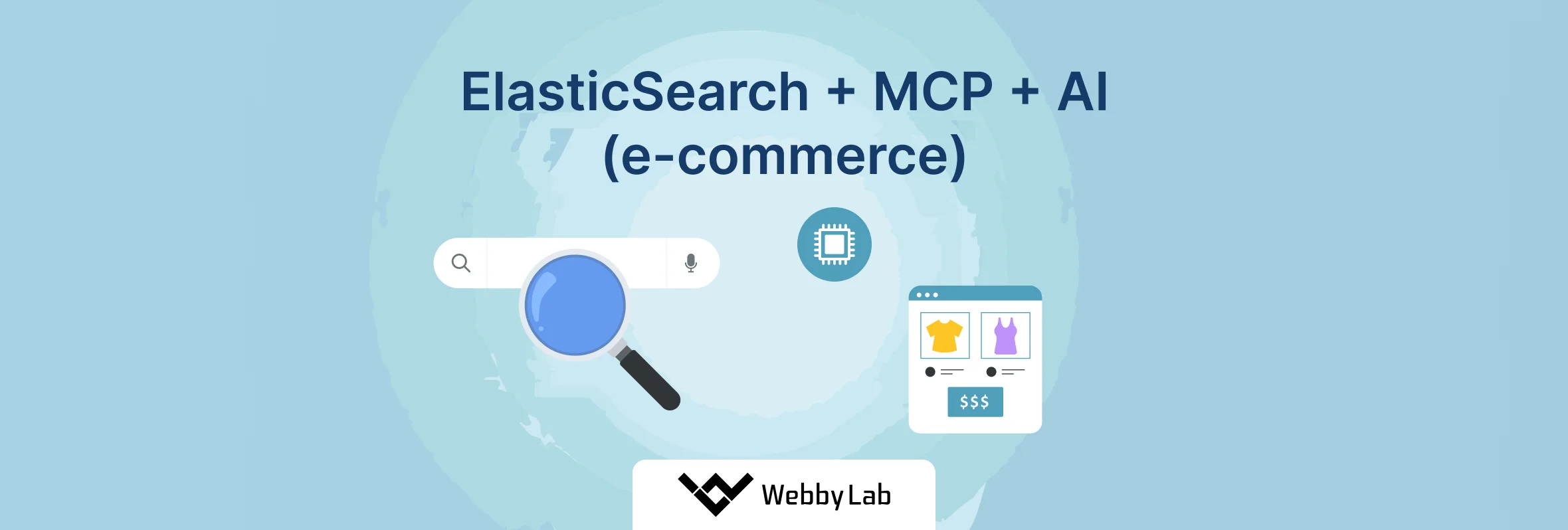
Revolutionizing E-Commerce Search: MCP, AI, and Elasticsearch
Why Traditional E-Commerce Search Fails The search bar is often where the buying journey begins. And sometimes, where it ends. Why? Traditional e-commerce search is…
November 27, 2025

Natural Language Processing (NLP): Can AI Understand Human Language?
How NLP Works: Key Techniques and Processes So, you’ve seen how prominent NLP models are in different business use cases. But how exactly does natural…
April 23, 2025

7 Benefits of Artificial Intelligence (AI) for Business [+ Real Cases]
Using AI for business growth has become a crucial strategy for modern enterprises.
February 11, 2025
Your AI Agent Is Your Next Advantage
Collaborate with WebbyLab to get expert AI agent development services.

Chief Business Development Officer at Webbylab
