
Voice Assistance for IoT Platforms: Benefits, Challenges, and Use Cases

As you step into your apartment, a simple “hello” triggers various actions — lights turn on, the indoor temperature becomes comfortable, and your favorite playlist starts playing. Remarkably, it’s a reality for over 40% of the US population currently engaged with IoT voice assistants.
Yet, voice assistants extend far beyond the smart home scenario we pictured above. They find applications in industrial, healthcare, agriculture, and other sectors. Offering efficiency, automation, and enhanced user experience, these solutions can significantly improve your IoT platform.
If you want to learn more about IoT voice assistant benefits, use cases, and challenges, keep reading WebbyLab’s post. Having integrated our 2Smart Cloud and 2Smart Standalone platforms with voice control technologies, we’re ready to share practical insights with you.
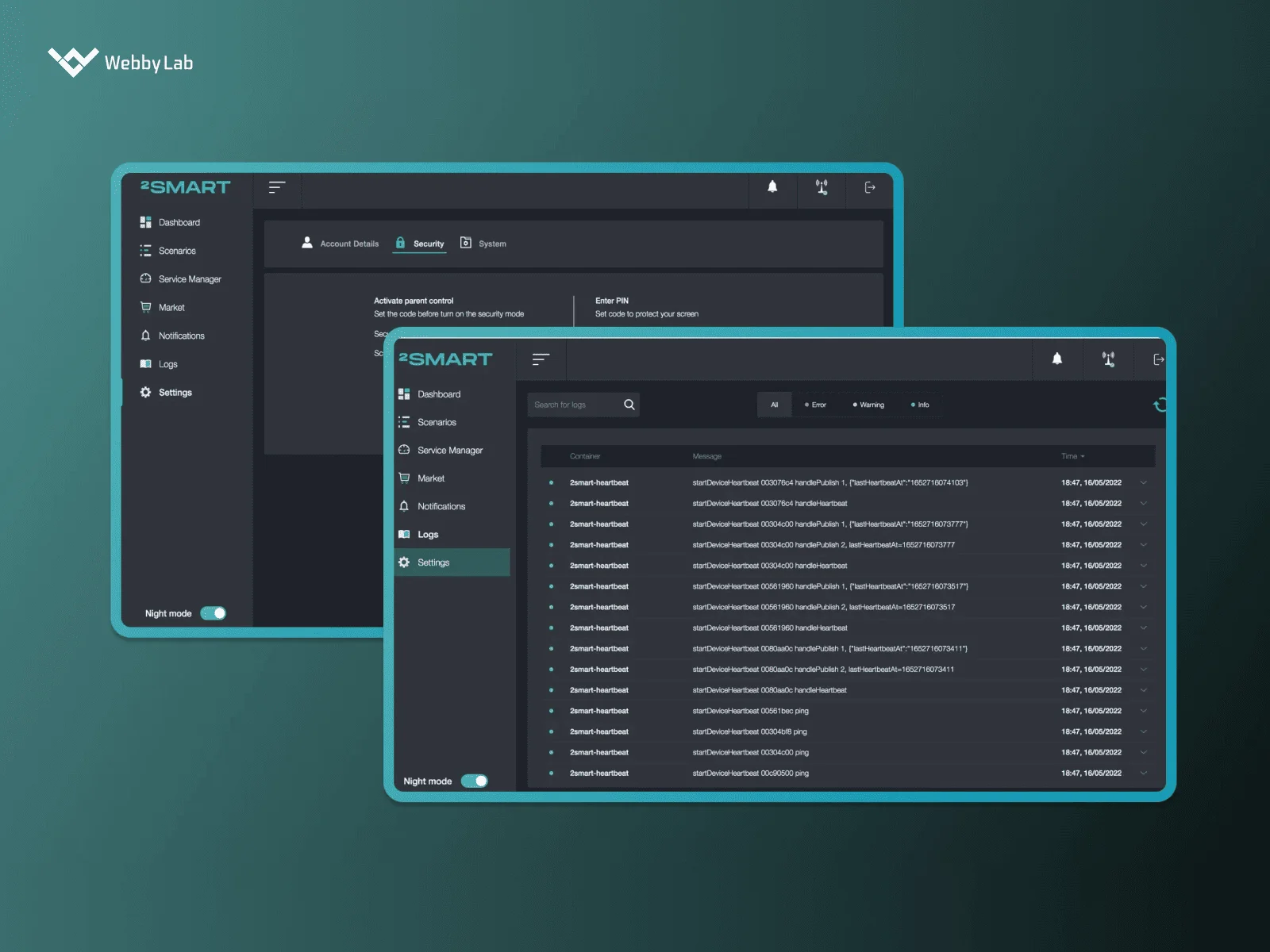
The 2Smart Standalone automation platform that can be integrated with Google Home and other voice assistants.
Understanding Voice Assistance in IoT
Voice assistant technology utilizes artificial intelligence, machine learning, and natural language processing to understand and react to spoken commands. Simply put, this tech allows devices to hear your voice and do what you ask. You can typically find voice assistant software on smart speakers, smartphones, smartwatches, and other gadgets.
Read also: How AI and IoT Work Together
When integrated with the IoT platforms, voice assistance enhances connectivity, ensuring IoT devices are remotely controllable through voice commands. It lets you adjust the thermostat, dim the lights, pick up phone calls, change greenhouse climate conditions, and handle numerous other tasks simply through your voice.
Many voice assistants are available for integration with your Internet of Things platform or IoT device. Here are the most prominent examples:
- Amazon Alexa — integrates with Amazon Echo and other Alexa-enabled devices and allows to control smart home devices, play music, and look up the necessary information on the web.
- Google Assistant — compatible with Google Home devices and many smart home products, this assistant controls gadgets, searches the internet, and beyond.
- Apple Siri — integrates with Apple’s HomePod, iPhones, iPads, and other Apple devices and controls smart home devices Apple’s HomeKit, plays music, sets reminders, and more.
- Microsoft Cortana — mainly integrates with Microsoft products for limited IoT applications.
- Samsung Bixby — available on Samsung smartphones and smart devices, this voice assistant can control gadgets, search the web, and handle Samsung ecosystem-specific tasks.
Besides the above popular solutions, there are alternative options for specific use cases. These are, for example, AliGenie for retail and shopping in China, XiaoAI tailored to Xiaomi’s smart home products, Kakao i for smart devices in the Korean language, and Line Clova for Japanese-language voice assistance.
Combining voice assistance with your IoT ecosystem extends beyond just convenience. It can offer hands-free operation of medical devices or automate industrial processes — the possibilities are almost limitless. Read on to explore other benefits of these innovative solutions.
Benefits of Voice Assistance in IoT
Implementing voice assistant technology in IoT systems offers hassle-free management of your smart devices and equipment. Let’s see the advantages this solution provides:
Enhanced User Experience
IoT voice control presents a new level of accessibility and user-friendliness. Users can effortlessly manage their devices with just their speech. Particularly, voice assistants offer the following perks for consumers:
- Simplified device management
- Hands-free operation
- Phone-free control via devices like smart speakers
- Better accessibility for people with disabilities or those facing challenges in traditional device control
By leveraging a combination of IoT and voice assistance tech, users can set thermostat preferences, check weather updates, or shop online without even touching their devices.
Efficiency and Automation
Using a voice assistant in IoT lets you automate various processes. You can configure the IoT devices of your ecosystem according to your needs and give them voice commands that they will execute. Consider a smart factory scenario where worker-voiced commands simplify complex machinery operations or a healthcare setting where medical professionals access patient information hands-free.
Scalability and Adaptability
An IoT voice assistant works well in different scenarios. You can either manage a smart home ecosystem or streamline industrial workflows and your operations as necessary. You can also integrate voice assistance-enabled devices into your systems and control them, along with other equipment.
Data Insights and Analytics
Voice data lets you analyze your end-user behavior and preferences to bring your customers more tailored solutions. If you’re using IoT device voice control within your company, let’s say, a manufacturing plant, you can study the obtained data for insights into potential workflow improvements.
The Architecture of the Voice IoT Systems

Maksym Lesnikov
Chief Technology OfficerHelped dozens of startups create effective digital products.
Get a ConsultationAn IoT voice assistant is a complex combination of various components. Let’s go through each of them in greater detail:
- Voice input — a user command or query captured by a microphone or voice-enabled device
- Speech recognition — a technology, usually automatic speech recognition (ASR), which processes the voice input and converts speech into text
- Natural language processing (NLP) — a combination of algorithms that analyze the text to understand what the user wants
- IoT devices — smart appliances, sensors, actuators, or machinery that use voice assistance tech and can be controlled by voice commands
- Cloud services — a part of the voice IoT systems that stores voice data and enables its processing
- Decision logic — an algorithm responsible for decision-making, which interprets user intent and comes up with relevant actions
- Device control — an action that occurs after the IoT device processes the command, e.g., turning on the light or setting up the indoor temperature
- Feedback and response — a response the voice IoT system provides to the user after completing the action
- Security and authentication — measures that ensure protection of voice and user data
- IoT Data analytics and learning — data analytics and ML tools that help the IoT system improve voice recognition accuracy and adapt to user preferences
Examples of Voice Assistance in IoT
As already mentioned, plenty of IoT smart applications involve voice assistance. Here are just several of them:
Smart Home Integration
Integrate an IoT voice assistant into your smart home ecosystem to control your gadgets conveniently. In fact, home automation using IoT allows you to embed the following solutions with voice control:
- Smart lighting systems
- Security systems
- Multimedia systems
- Climate control solutions
- Sleep enhancement solutions
- Personalized shopping assistants
- Energy management solutions
- Assistants for older adults and people with disabilities
Or you can simply leverage smart speakers by Google or Alexa to perform simple tasks like setting reminders or turning on the TV.
Healthcare and Medical Devices
Use an IoT voice assistant in healthcare to improve patient safety and streamline workflows for medical professionals. For example, patients can easily share health information by just talking to medical systems, making remote patient monitoring simpler. Or they can leverage voice-activated medication reminders to stay on track with their treatment plans.
Industrial and Manufacturing
An IoT voice assistant makes industrial processes more efficient by offering hands-free control in manufacturing, supply chain, and logistics. For instance, factory workers can use voice commands to activate the necessary actions within their equipment.
Retail and Customer Service
Voice assistants are prevalent in retail and customer service. In-store, customers can use this tech to receive recommendations or ask questions about products. Businesses, in turn, can leverage chatbots and virtual assistants to offer top-notch customer support.
Agriculture and Environmental Monitoring
Combining IoT and voice assistance in the agricultural sector lets farmers leverage precision farming techniques with voice-activated controls, e.g., to manage equipment or observe their crops. It’s also possible to use voice assistants for environmental monitoring, for example, adjusting heating, ventilation, and air conditioning systems to ensure optimal climate conditions.
Challenges and Considerations
When dealing with voice control in the Internet of Things, it’s crucial to get ready for certain limitations. Here are some of them:
Privacy and Security Concerns
Since users exchange voice data with their IoT devices constantly, ensuring privacy and robust protection is essential. Consider implementing encryption and access control management system, as well as providing secure data storage. It’s also best to educate your users about privacy settings.
Integration and Compatibility
Integrating a voice assistant for IoT platforms can be challenging, given the different communication protocols and standards used across devices. To implement such a solution properly, consider the unique requirements of your voice assistance provider.
Here’s how to integrate different voice control solutions:
- Google Home integration: Enable support for the Matter standard at the device level, leverage cloud-to-cloud integration, and implement built-in compatibility logic on the device side.
- Siri integration: Implement Siri shortcuts at the mobile app level or integrate with Apple HomeKit.
- Alexa integration: Develop devices that perform the voice assistant’s functions or make your device compatible with and controllable by Alexa through cloud integration, on-device module, or local connection.
Webbylab Use Cases
WebbyLab has a profound background in leveraging voice assistants for IoT platforms. Here are some of our IoT solutions:
2Smart Cloud Integration with Google Home
To merge our 2Smart Cloud platform with Google Home, our team went through all the procedures required by Google and published our custom bridge for device integration on Google Home. That’s how we enabled our end-users to control their devices through Google Home and Google Assistant.
Ask experts how tailored IoT solutions can meet your enterprise needs!
Let`s talk!We’ve successfully developed and tested this integration for our 2Smart brand. Now, we extend this feature to our customers through white-label instances of the platform. This allows them to customize the bridge, undergo necessary certifications, and publish branded bridges in the Google Home ecosystem.
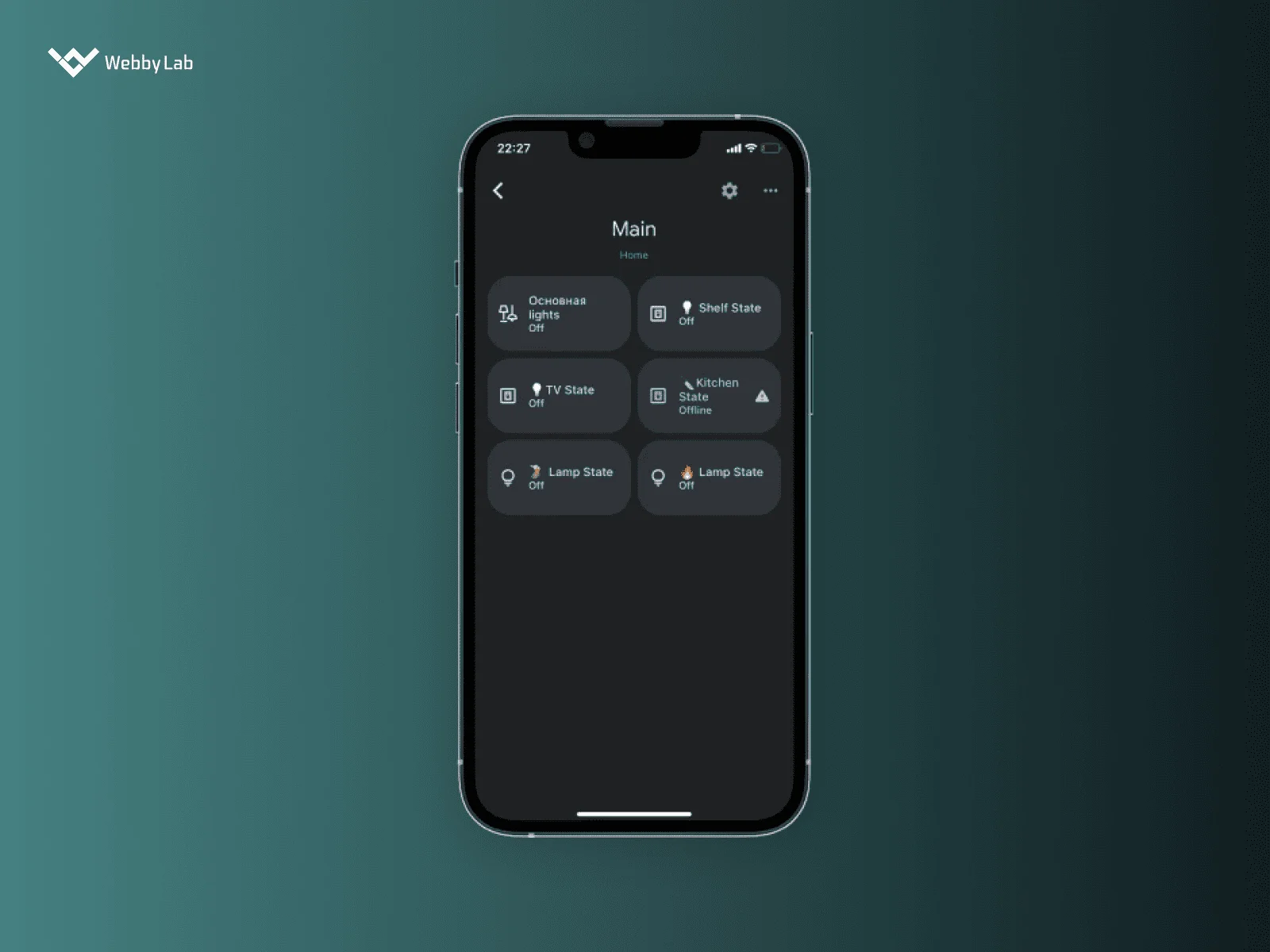
Turning on the lamp in the 2Smart Cloud application via the Google Home voice assistant.
2Smart Cloud, Propuskator, and White-Label Solution Integration with iOS Shortcuts
We have developed and provided our users with a device management tool through iOS shortcuts in 2Smart Cloud and Propuskator mobile apps as well as all branded white-labeled instances. In this way, we enabled configuring shortcuts for easy device status control through Siri Voice Assistant.
On top of that, we completed a PoC for the native integration of ESP32-based devices into the Apple Home ecosystem. We also offer firmware development services compatible with Apple Home.
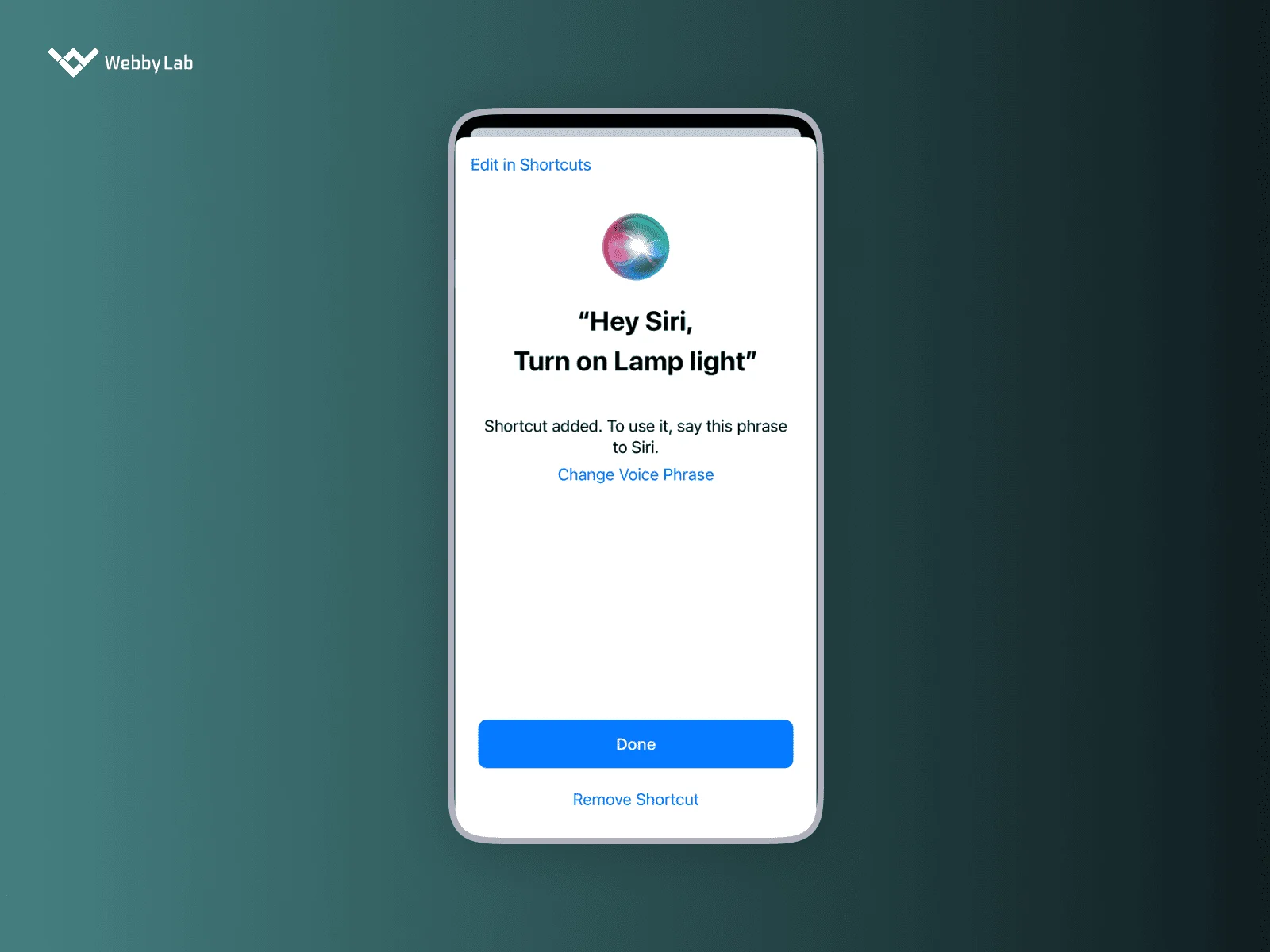
Adding iOS shortcuts for device control through 2Smart Cloud.
2Smart Standalone Integration with Apple Home and Google Home
We developed a voice control bridge based on the open-source HomeBridge solution in our 2Smart Standalone automation platform. It allows users to integrate devices into Apple Home or Google Home and manage them using voice assistants.
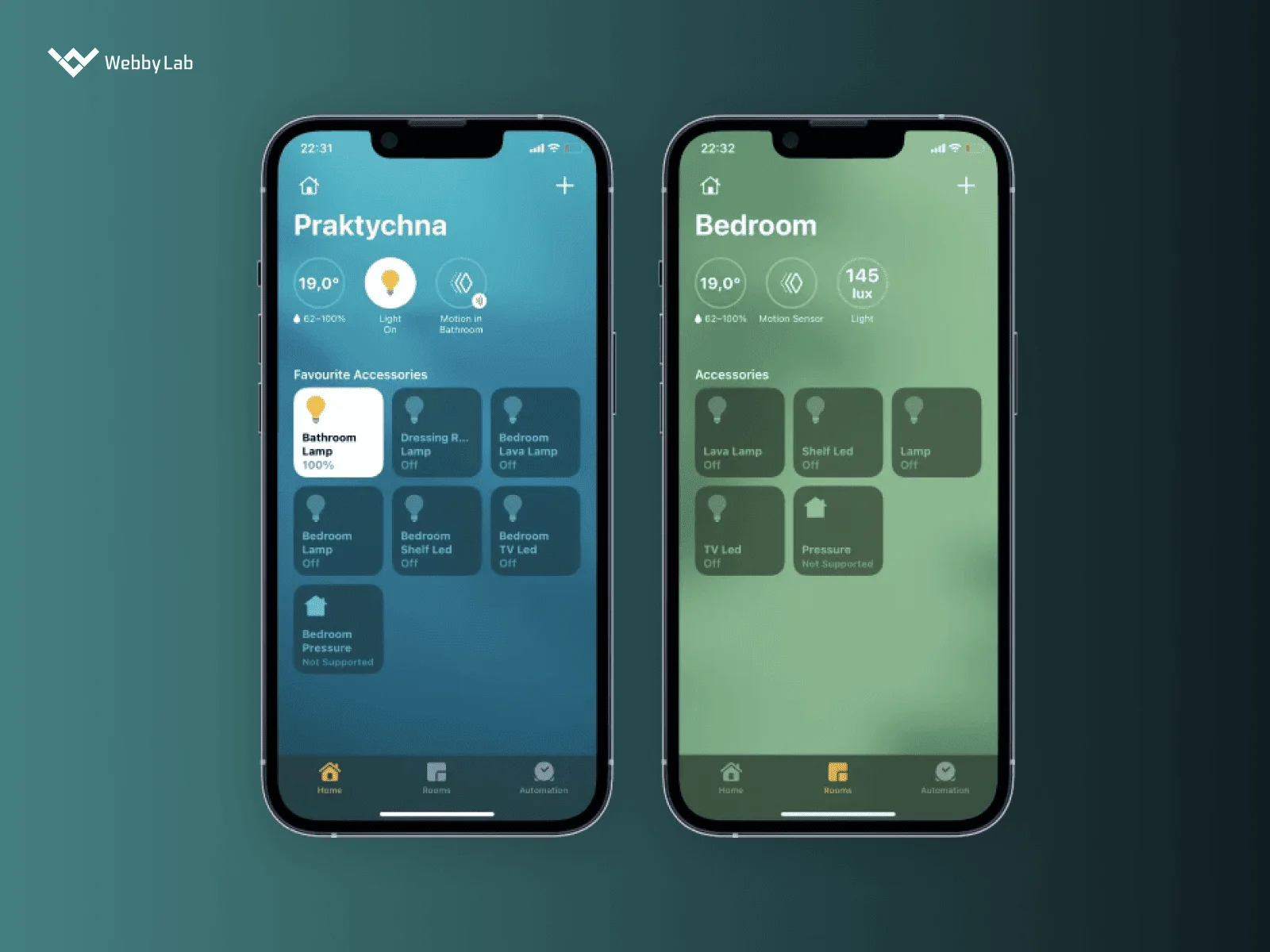
Integrating 2Smart Standalone with the Apple Home application.
Smart Home Device Integration with Amazon Alexa
Through internal R&D, we gained expertise in merging smart home devices with the Amazon Alexa ecosystem through integration bridges. Our team can handle custom development for devices and solutions aligned with Alexa concepts.
Want to learn more about our work? Feel free to explore our other IoT case studies.
The Bottom Line
IoT voice assistants bring convenience, efficiency, and automation to different sectors. These solutions find IoT applications in smart buildings, healthcare, manufacturing, agriculture, and beyond, streamlining workflows and improving user experience.
If you want to incorporate such tech into your IoT platform, consider WebbyLab as your reliable partner. Our extensive experience with voice assistant solutions will ensure hassle-free integration and let your end-users interact with connected devices effortlessly. Get in touch with our Internet of Things development team for more details.


Written by:

Kostiantyn Oliynyk
Head of IoT at Webbylab
With a robust academic background in Telecommunication Systems Engineering, I apply my knowledge to lead innovations in the IoT domain. Starting as the first team member in the newly formed IoT department at WebbyLab, I've spearheaded its growth, fostering the expansion into embedded and hardware development alongside our core software projects. My dedication lies in pushing the boundaries of IoT technology, fostering a culture of innovation and excellence that profoundly impacts our clients' operational success.

