
Comprehensive Guide to IoT Platform Architecture and Layers
Discover the mandatory and optional enterprise IoT platform architecture layers. Learn what they are used for and how to design a production-ready IoT solution.

When an enterprise starts dealing with thousands of devices communicating all at once, “just connecting sensors to the cloud” quickly turns into a complex engineering challenge. Without a production-ready IoT platform architecture, IoT solutions become hard to scale, risky to secure, and costly to maintain.
WebbyLab has tackled this in real projects, from an automated A/C drain line cleaner where we implemented device pairing, DevSecOps, CI/CD, and middleware, to the 2Smart Cloud platform that helps vendors bring smart devices to market faster.
In this guide, we’ve got IoT platform layers explained, looking into how each component works, where it is used, and how they fit together.

The app layer of an automated A/C drain line cleaning solution.
Highlights
- A production-ready IoT platform’s success largely depends on architecture. Consider essential layers from the outset.
- Mandatory layers such as device, connectivity, middleware, data, application, and security are the backbone of any IoT platform.
- Optional layers are essential for businesses with serious scale, performance, and compliance needs.
What Are IoT Platform Layers?
IoT architecture is inherently complex, combining sensors with servers, firmware with software, and more in between. To keep things in order, we use layers. Think of these as a way of removing complexity. They allow a firmware engineer to focus on the hardware without needing to be an expert in cloud computing, and vice versa.
Some of these layers are mandatory, such as a connectivity or device layer in IoT platforms. Without them, an IoT solution simply won’t work. Others, in turn, are optional. But they are strongly recommended if you have high expectations for scalability, performance, regulatory, and other requirements.
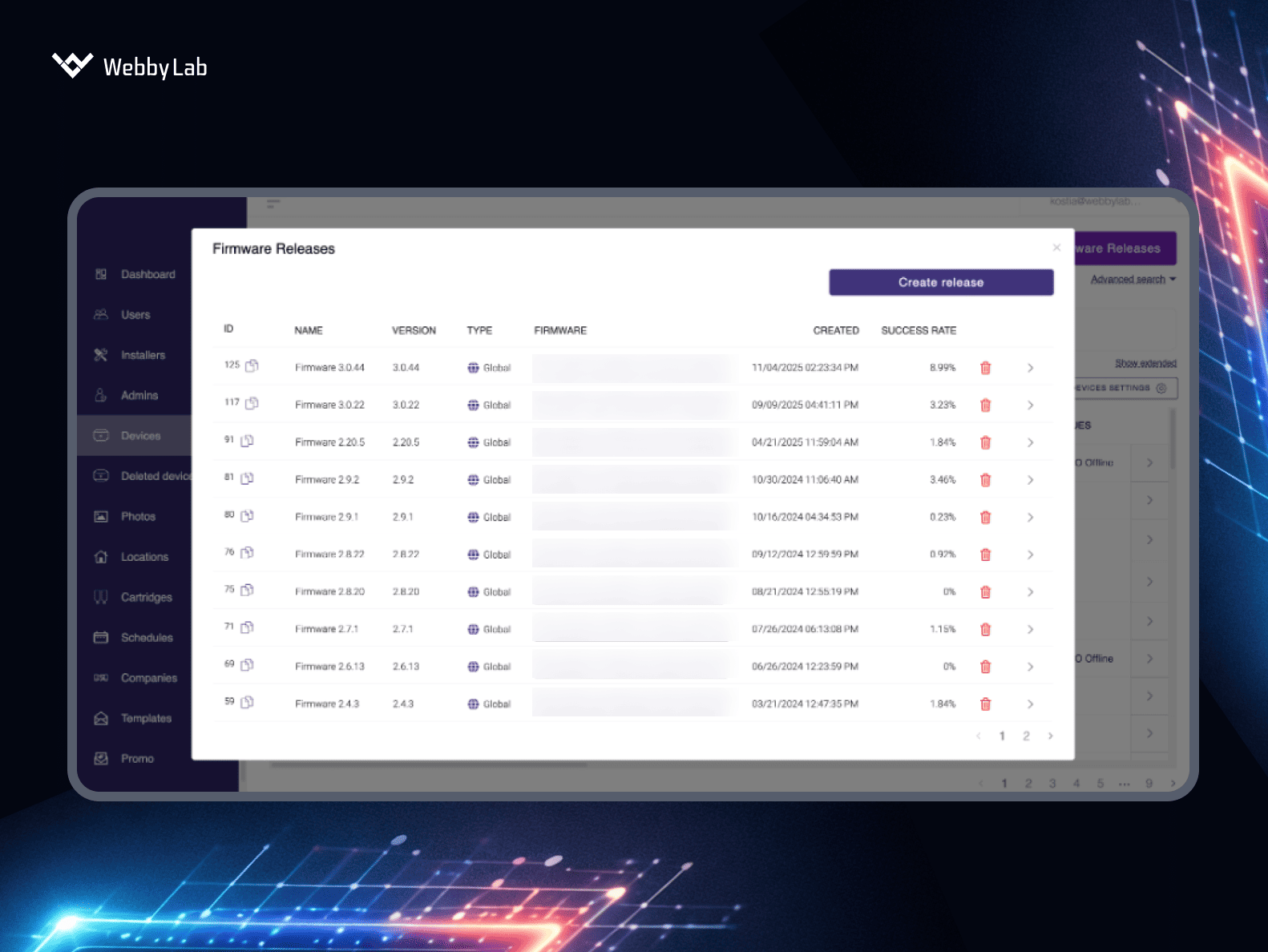
DevSecOps/CI-CD firmware layer.
Below are the mandatory and optional layers of custom IoT platforms for enterprises:
| Layer | Components | Responsibilities | Mandatory | Real-life examples |
| Device/Thing Layer | Sensors, actuators, controllers (MCU/SoC), firmware, drivers | Data collection, command execution | Yes | Electricity meter with NB-IoT module; ESP32 temperature sensor |
| Connectivity/Network Layer | BLE, Wi-Fi, Ethernet, NB-IoT/LTE-M/5G, LoRaWAN, gateways | Reliable telemetry and command delivery, QoS, routing | Yes | BLE sensors → gateway → MQTT over Ethernet |
| IoT Service (Middleware) Layer | MQTT/AMQP broker, device registry, command channel, OTA, rules/automations | Unified device↔service interaction, scaling, multi-tenancy | Yes | EMQX or HiveMQ with microservices for registry and commands |
| Data Ingestion & Storage | Event buses, streaming (Kafka), ETL/ELT, TSDB, object/SQL storage, data catalogs | Telemetry ingestion, long-term storage, analytics preparation | Yes | Kafka → InfluxDB/S3 → analytics |
| Analytics & AI | Aggregations, CEP, ML/AI (cloud/edge), digital twins | Insights, alerts, optimization, predictive maintenance | No (yet commonly present) | Wear prediction model for a fleet of welding machines; field irrigation optimization algorithms |
| Application Layer | Web/mobile UI, REST/GraphQL APIs, dashboards | User interaction, B2B integrations | Yes | Web panel for service centers; operator mobile app; ERP integration |
| Security & Trust | PKI/certificates, TPM/SE, IAM/ABAC/RBAC, secrets, ZTA, security monitoring | Identity, encryption, access control, secure OTA/onboarding | Yes (end-to-end) | Signed OTA, mTLS between device and broker |
| Edge/Fog Computing | Edge gateways, local compute, cache/buffers, on-site ML | Latency, filtering, privacy, work with unstable connections | No (needed for low-latency/poor channel/local processing scenarios) | Video analytics on gateway; standalone ACS decision-making without internet |
| Device Onboarding & Lifecycle | Zero-touch provisioning, rekeying, inventory, policies, serials | Secure commissioning, updates, decommissioning at scale | No (separate layer for large fleet/audit requirements) | Production flashing with factory certificates, ZTP |
| Observability & Ops | Metrics/logs/traces, SLO/SLA, alerts, SRE processes | Platform health, fast diagnostics and recovery | No (essential at large SLO/scale) | Prometheus + Grafana + MQTT degradation alerts |
| Integration & Interoperability | Adapters/bridges (OPC UA/Modbus), oneM2M/Matter profiles, API gateway | Connecting third-party systems/protocols, cross-platform exchange | No (needed in multi-vendor environments) | Bridge for KNX devices configured in ETC; integration with Google Home |
| Data Governance & Compliance | Data classification, retention, lineage, localization, anonymization | Regulatory compliance, data lifecycle management | No (for regulated domains/long-term storage) | Retention rules (3/12/36 months); PII masking |
| DevSecOps/CI-CD (Firmware & Platform) | Pipelines, SBOM signature/scan, canary updates, rollback | Fast, secure firmware/service releases | No (critical for frequent releases/strict security requirements) | OTA canary rollout to 5% of devices with auto-rollback on errors |
Which Layers Make Up a Production-Ready IoT Platform
We’ve already mentioned the must-have enterprise IoT platform architecture layers. Now, let’s discuss them in greater detail.
Device/Thing Layer
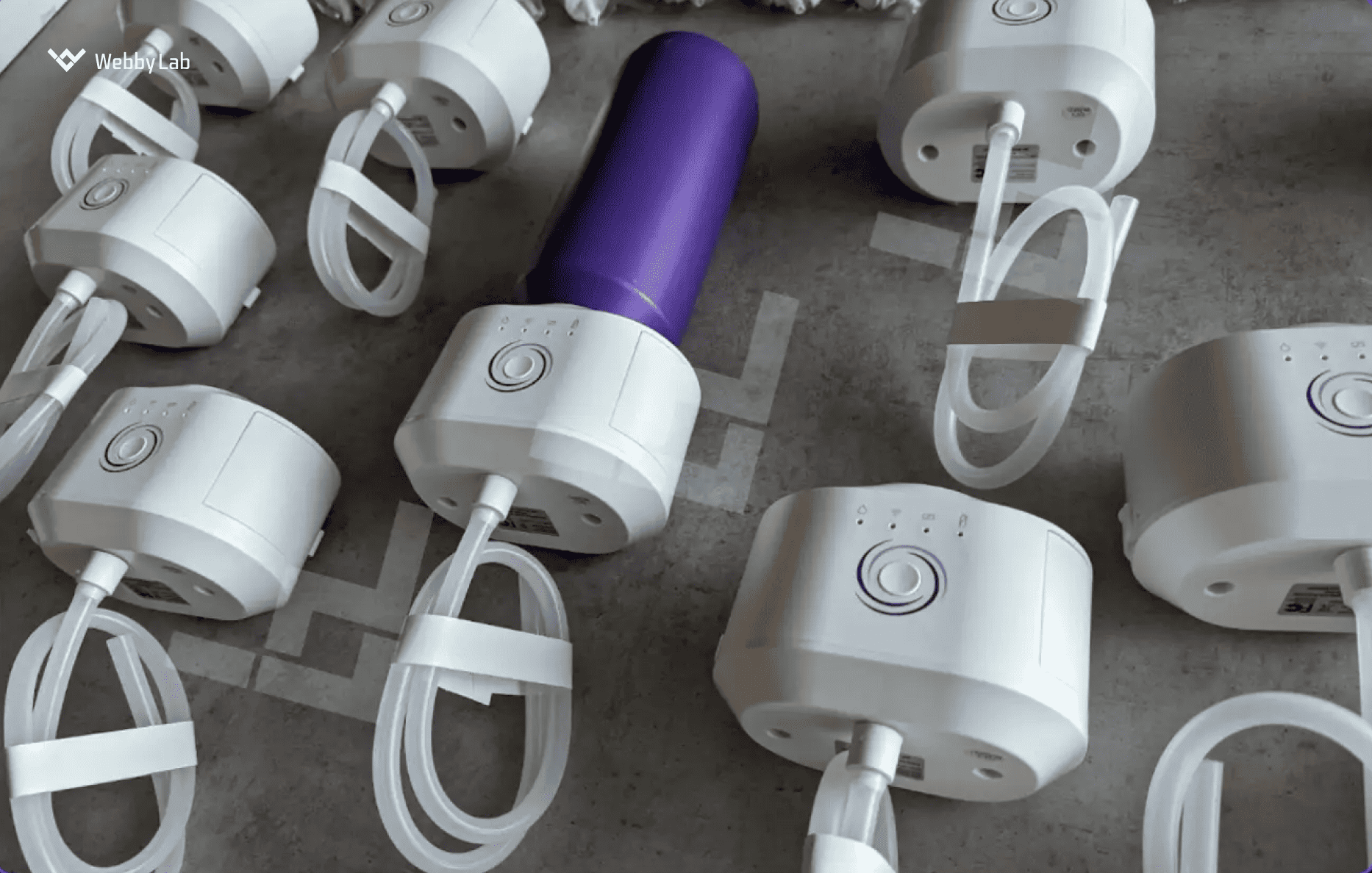
Smart automated A/C drain line cleaners.
The device layer in IoT platforms is the primary interface between the physical and digital worlds. It consists of several “things”: sensors that monitor and capture environmental variables, controllers that send the commands, and actuators that execute these very commands. If this layer is unstable or poorly designed, everything on top of it inherits those problems.
Want to learn more about the device layer components? Check out our post on the role of actuators in IoT systems.
Learn moreConnectivity/Network Layer
If the devices are the primary data sources, the connectivity and network layer IoT is the specialized infrastructure responsible for transferring that data. It uses BLE, Wi-Fi, Ethernet, NB-IoT, 5G, and other connectivity protocols to ensure telemetry and commands reach the cloud securely and reliably.
IoT Service/Middleware Layer
This layer is the brain of the platform, typically built around MQTT or AMQP brokers, device registries, command channels, and OTA update services. It abstracts millions of devices into manageable digital entities and enables automation rules and workflows. Middleware is what allows platforms to scale from dozens to hundreds of thousands of devices without redesign.
Data Ingestion & Storage
Sensors generate continuous data streams that must be ingested, processed, and stored efficiently. Data ingestion and storage in IoT platforms is usually performed through event streaming via Kafka, ETL pipelines, time-series databases, and object or SQL storage. This setup ensures that raw telemetry becomes usable for analytics.
Application Layer
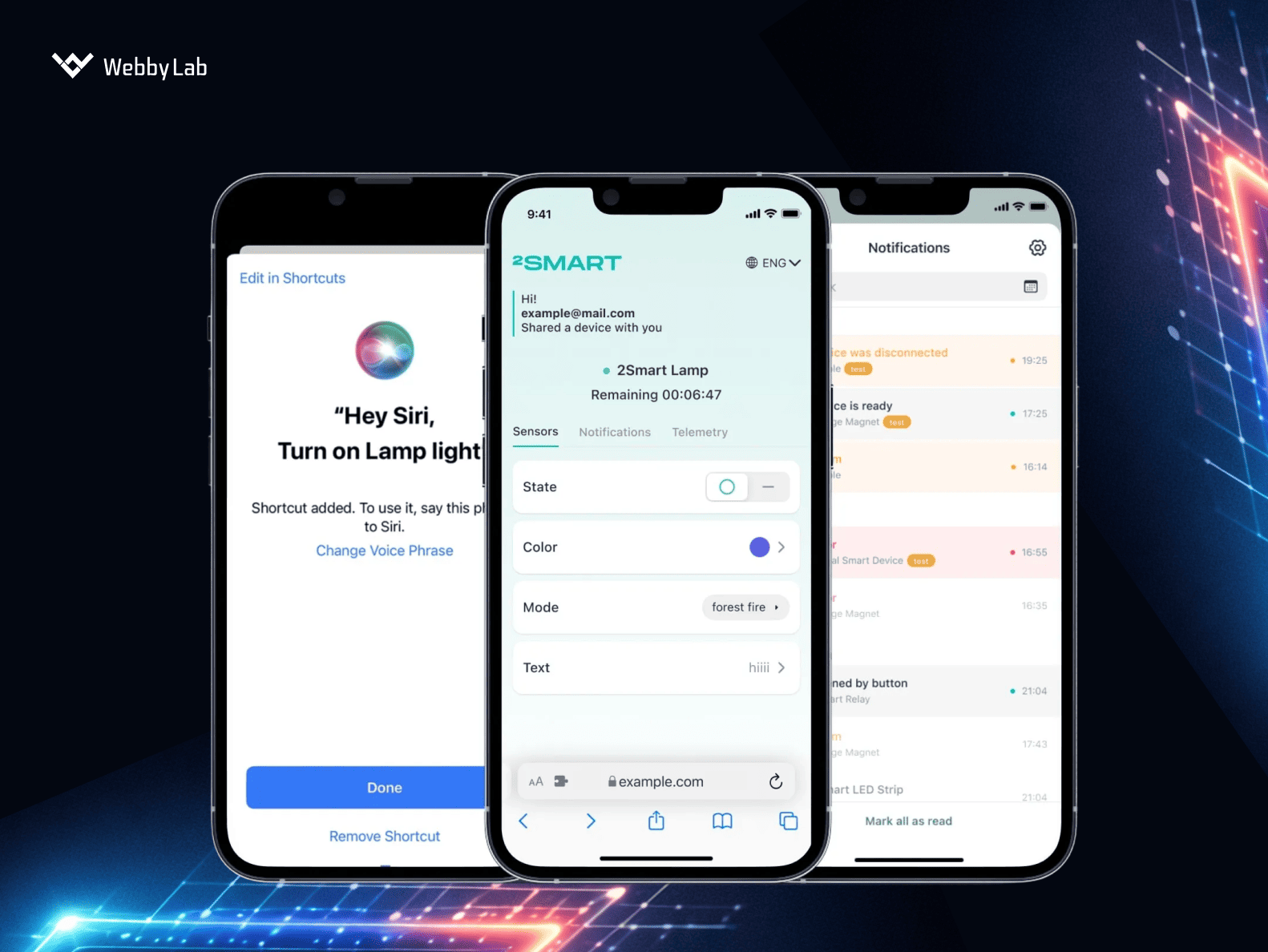
2Smart Cloud mobile app.
The application layer for IoT systems is where data is converted into business value for end users. Through REST or GraphQL APIs, the platform populates web and mobile UIs with real-time dashboards and control panels. This layer is also about integration, allowing the IoT platform to connect to existing ERP, CRM, or other systems.
Security & Trust
Security and trust in IoT platforms are an end-to-end layer, meaning they hold every other layer together. This component includes PKI (Public Key Infrastructure), TPM (Trusted Platform Modules), Identity Access Management (IAM), RBAC (Role-Based Access Control), Zero Trust principles, and encrypted OTA updates.

Looking to design an IoT platform that’s ready for enterprise scale? Opt for our IoT app development services.
Learn moreDesigning Production-Ready IoT Platforms
How to design a production-ready IoT platform? Adopt end-to-end thinking. In other words, ensure devices, networks, data pipelines, apps, cloud services, and other layers work as a single, interconnected system rather than isolated components.
For enterprise teams that want these layers pre-built and production-tested, the 2Smart Core IoT platform framework covers device connectivity, data ingestion, multi-tenancy, automation, and apps as modular building blocks — deployable in months with full code ownership.
Here’s what to consider when building an IoT platform architecture for real-world applications:
- Think about scalability beforehand. Your architecture must handle ten devices with the same grace as ten thousand. Consider the potential types and number of devices your solution will support in the future.
- Prioritize integration and interoperability in IoT platforms. Determine how your current software, devices, and protocols will connect with the platform. This will help you avoid the need to rewrite your codebase for every new integration.
- Implement security end-to-end. Once again, security must be embedded across the entire IoT platform lifecycle. Enforce encrypted communication, strong device IDs, Zero Trust policies, and other means.
- Pay attention to latency. Latency is the delay between a physical event and the platform’s response to it. Reduce this lag by using lightweight protocols or moving to the edge.
- Manage compliance effectively. Designing a production-ready IoT platform requires adherence to data privacy and other regulations. Take these requirements into account from the very beginning.
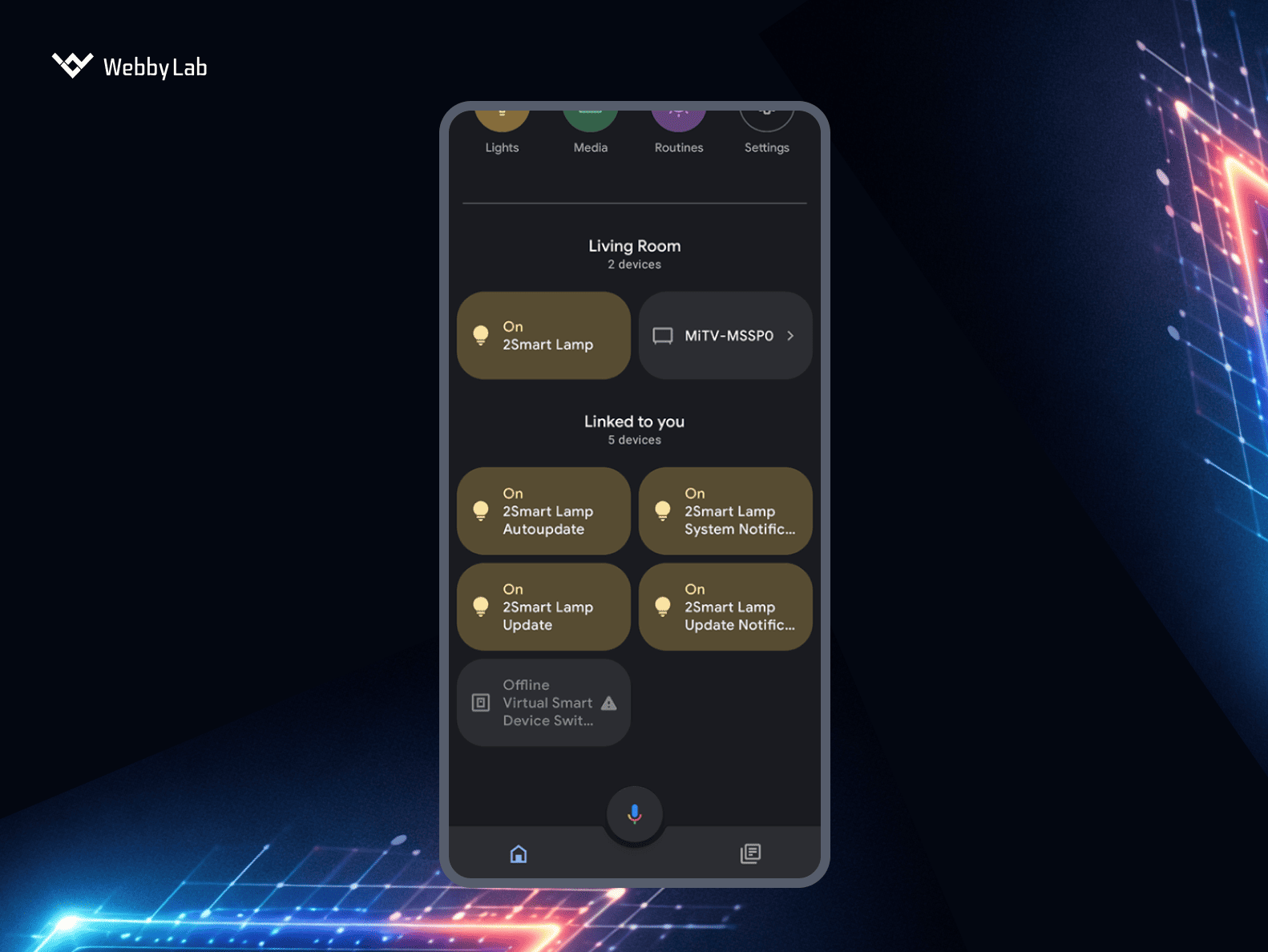
Integration and interoperability in 2Smart.
Edge + Cloud Computing
When working on an end-to-end IoT platform design, you may wonder where it’s best to process your data. Cloud is a common choice, yet it requires constant internet connectivity. An IoT platform architecture with cloud and edge computing is a smarter approach. You benefit from both the cloud’s scalability and advanced analytics and the edge’s low-latency decisions and uninterrupted work connectivity outages.
Need a robust enterprise IoT platform? Explore our IoT development services.
Learn moreConclusion
To build a reliable enterprise IoT platform architecture, you need to go beyond just connecting devices to the cloud. A production-ready solution demands a set of mandatory and optional layers covered, starting with “things” and connectivity, and ending with the advanced analytics and AI layer in IoT platforms.


Written by:

Kostiantyn Oliynyk
Head of IoT at Webbylab
With a robust academic background in Telecommunication Systems Engineering, I apply my knowledge to lead innovations in the IoT domain. Starting as the first team member in the newly formed IoT department at WebbyLab, I've spearheaded its growth, fostering the expansion into embedded and hardware development alongside our core software projects. My dedication lies in pushing the boundaries of IoT technology, fostering a culture of innovation and excellence that profoundly impacts our clients' operational success.


FAQ
How to design a production-ready IoT platform?
Design it end-to-end. This means you should treat mandatory platform architecture layers (devices, connectivity, data and storage, apps, security, and IoT services) as one system.
Which layers are mandatory vs optional?
Mandatory layers are devices, connectivity and network, IoT services, data ingestion and storage, apps, and security. Optional ones include analytics and AI, edge computing, device onboarding, integration and interoperability, data governance and compliance, DevSecOps or CI-CD, as well as observability and operations in IoT.
How to ensure security and trust across the platform?
Use PKI/certificates, TPM/SE, IAM/ABAC/RBAC, secrets, ZTA, and security monitoring to protect your IoT platform.
Can cloud and edge layers be combined effectively?
Absolutely. Cloud can be used for scalability and centralized management, edge computing — for low-latency, poor channel, and local processing scenarios.